Flooring work hours, access and waste in North York
Toronto construction noise, permits, parking and disposal restrictions that affect a North York floor replacement and the work included in your estimate.
Taking the old floor out
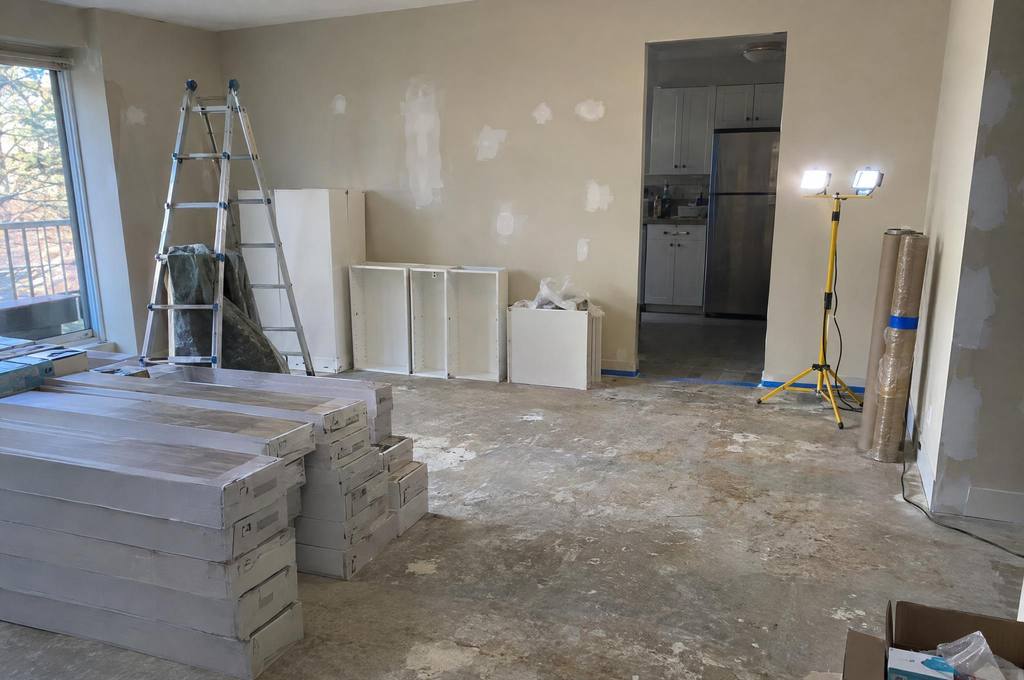
Taking up a floor means moving the old material through the home and finding a disposal route that accepts that load.
Toronto excludes renovation materials such as baseboards, lumber and tiles from its oversized curbside collection.
The City also says construction and renovation waste must not be set out as excess garbage.
Tell MRG what needs removing and whether it includes tile, wood, carpet or several layers of older finishes.
Request removal and waste hauling together if both are needed, and check that both appear in the agreement.
Source: City of Toronto, Items excluded from oversized collection
Carpet, tile and wood waste
List the tile, wood, drywall and packaging separately in the request so the disposal route can be checked for each material.
Toronto depots list a four-foot maximum for lumber and separate conditions for clean drywall, including removing nails, screws and attached materials.
Concrete, bricks and asbestos are among the materials on the depot refusal list, so a mixed renovation load cannot be assumed acceptable.
Describe any material you cannot identify and any older layers already exposed, without disturbing them just to complete the request.
Include attached trim and debris from adjoining work so the removal request describes the whole load.
Source: City of Toronto, Accepted and refused depot materials
Depot access adds work to a removal
Toronto depot rules require covered loads, and unsafe vehicles or unsecured loads can be refused entry.
The depot process includes a deposit, unloading the material and returning to the scales to determine the final charge.
Depot staff do not unload the vehicle for the person bringing the material, and waste must go in the designated area.
Those requirements are part of why waste hauling needs to be described and agreed with the floor removal.
The depot sources below document the restrictions that affect a load, while the estimate states the removal work MRG will carry out.
Construction hours for a flooring job
Toronto Chapter 591 includes alteration and repair in its definition of construction, which is relevant to a floor replacement.
The ordinary rule prohibits clearly audible construction noise from 7 p.m. to 7 a.m. the next day, with the morning limit extended to 9 a.m. on Saturday.
It also prohibits that construction noise all day on Sundays and statutory holidays, subject to applicable exemptions.
Loading and unloading sound has its own provision, and the code says the most restrictive provision applies when more than one covers the sound.
Send any building work hours too, because a condo can have additional limits for renovation access.
Parking for materials and removal
Toronto has a general three-hour parking limit unless an applicable exemption applies, so the nearest curb is not automatically a full-day work space.
Parking in front of or within 60 centimetres of a driveway or laneway is also prohibited under the traffic code.
A commercial loading zone is for active loading or unloading, which does not make it a place to leave a vehicle throughout the installation.
Tell us about a driveway, a shared entrance, the loading bay or another permitted place for deliveries when you request the work.
If the access route crosses building common areas, include management instructions for that route.
Source: Toronto Municipal Code, Chapter 950, Traffic and parking
Permits depend on the work around the floor
Toronto lists structural or material alterations, including adding or removing walls, among the changes that require a building permit.
The permit list also covers installing or changing plumbing and heating, which may be part of the work around a new floor.
Describe any wall, structure or system changes alongside the flooring instead of treating them as a small extra once work has started.
A disposal bin or stored material in the public right of way can also require a Street Occupation Permit.
Tell MRG what else is changing, and confirm the requirements with Toronto Building for the actual project.
Put access and disposal in the request
Include the building type, floor number, delivery entrance and the old material that needs to leave the home.
Say whether furniture moving, new baseboards and repairs beneath the current floor should be included with installation.
MRG discusses those details before agreeing the work and dates in writing.
If removal exposes damage that could not be seen beforehand, MRG shows you and agrees the change before extra work starts.
Sources for this page
- City of Toronto, Items excluded from oversized collection
- City of Toronto, Excess garbage restrictions
- City of Toronto, Accepted and refused depot materials
- City of Toronto, Depot unloading and weighing
- City of Toronto, Depot regulations
- City of Toronto, Drop-off depot locations
- Toronto Municipal Code, Chapter 591, Noise
- Toronto Municipal Code, Chapter 950, Traffic and parking
- City of Toronto, Building permit requirements
- City of Toronto, Street occupation permits
15 November 2026
Services and access details
Questions about flooring work hours, access and waste
What route is needed to remove an old floor?
Taking up a floor means moving the old material through the home and finding a disposal route that accepts that load.
Toronto excludes renovation materials such as baseboards, lumber and tiles from its oversized curbside collection.
The City also says construction and renovation waste must not be set out as excess garbage.
Source: City of Toronto, Items excluded from oversized collection
Can carpet, tile and wood be treated as one waste type?
List the tile, wood, drywall and packaging separately in the request so the disposal route can be checked for each material.
Toronto depots list a four-foot maximum for lumber and separate conditions for clean drywall, including removing nails, screws and attached materials.
Concrete, bricks and asbestos are among the materials on the depot refusal list, so a mixed renovation load cannot be assumed acceptable.
Source: City of Toronto, Accepted and refused depot materials
What handling is involved after old flooring leaves the building?
Toronto depot rules require covered loads, and unsafe vehicles or unsecured loads can be refused entry.
The depot process includes a deposit, unloading the material and returning to the scales to determine the final charge.
Depot staff do not unload the vehicle for the person bringing the material, and waste must go in the designated area.
Tell us about your floor
List the rooms, the current floor and the finish you want, with the building type and approximate area.